


Brake pads and discs: what wears out first
Brakes wear in a predictable order, and the order is why we measure rather than guess.
Here is what that means in practice:
1. Pads, every 25,000 to 40,000 miles
A new pad is around 12mm of friction material. Below 3mm we book it in. Town driving and a heavy car take pads out faster than motorway miles, which is why two identical cars can be years apart.
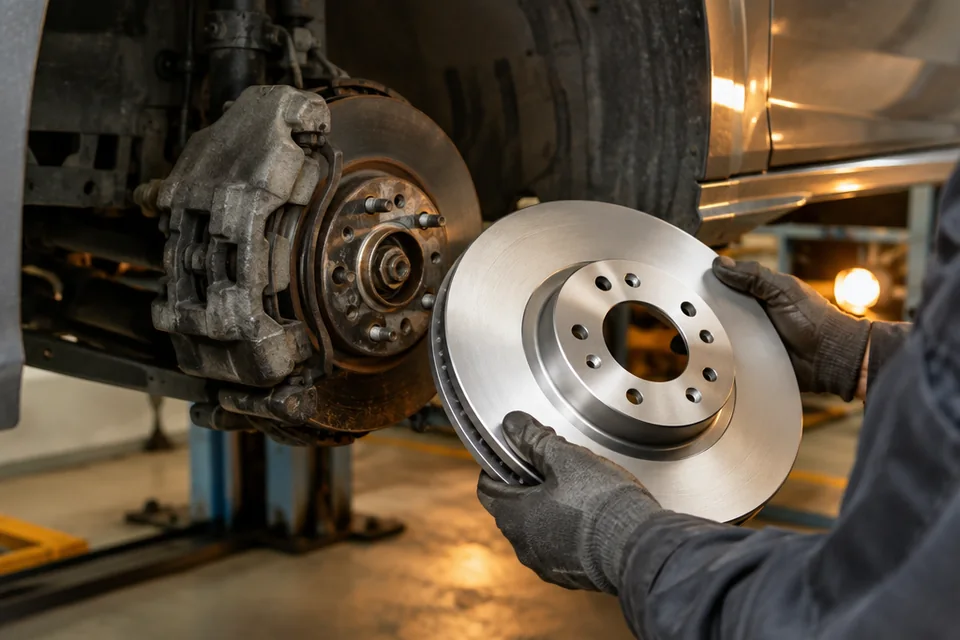
2. Discs, usually every second set of pads
A disc has a minimum thickness stamped on it. When the measurement gets near that, or when there is a lip you can catch a fingernail on, the disc goes with the pads. Fitting new pads to a worn disc wastes both.
3. Fluid, every two years whatever the mileage
Brake fluid absorbs water out of the air. Wet fluid boils under hard braking and the pedal goes long exactly when you need it not to. We test the moisture content at every service and change it when the test says so.
4. Noises worth acting on
A light squeal on the first stop of a cold morning is usually nothing. A steady grinding is metal on metal and is costing you a disc for every week you leave it.
Ask for the measurements. Any garage that will not give you a number for the pads is guessing too.

More from the workshop