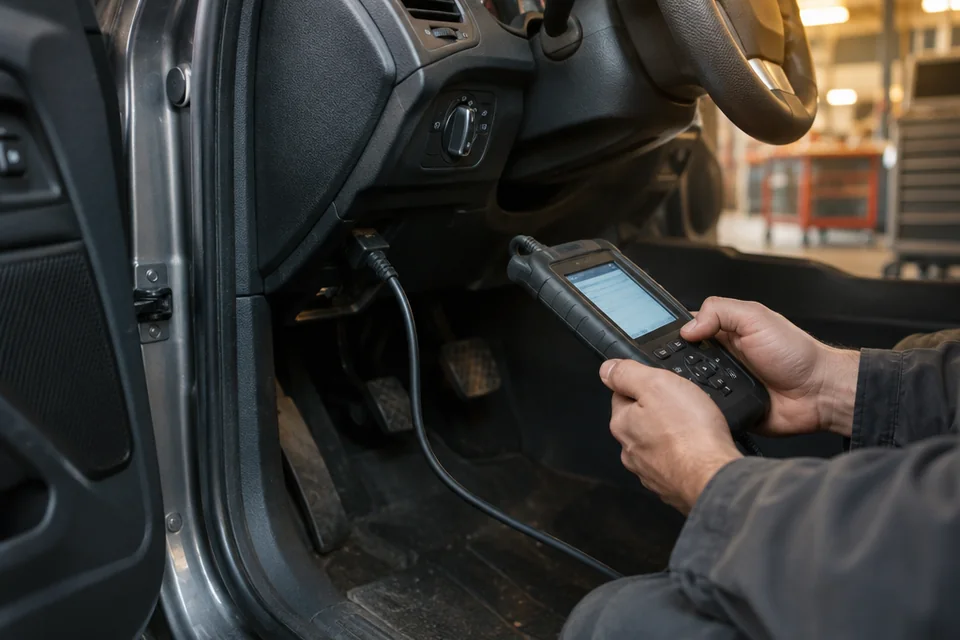



What actually happens in an interim service

Most cars now go a year or 12,000 miles between full services, which is a long time for oil to sit in an engine doing short journeys in cold weather. An interim service is the halfway check: it costs about half of a full one and it catches the things that do not wait.
Here is what that means in practice:
1. The oil and the oil filter
Oil does not wear out so much as get dirty and thin. On a car doing school runs and short trips it never gets properly hot, so moisture and fuel stay in it. Changing it halfway through the year is the single cheapest thing you can do for an engine.
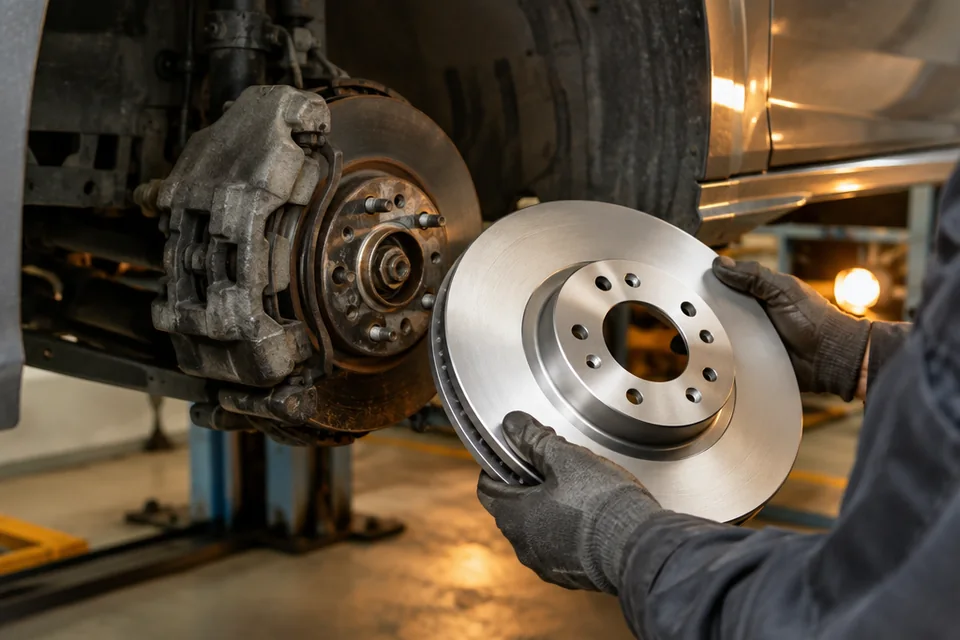
2. Brakes, measured rather than glanced at
Pads and discs get measured with a gauge and the numbers written on your sheet. If a pad has 4mm left we tell you it has 4mm left, not that it needs doing today. Next time you can see whether it moved.
3. Tyres, including the spare
Tread depth at three points across each tyre, pressures set, and a look at how the wear is distributed. Wear on one shoulder means alignment, and alignment is cheaper than a tyre.
4. Lights, wipers and the boring things
The items that fail an MOT and that nobody notices until a dark evening in November. Bulbs are a few pounds fitted while the car is here.
If your car does under 6,000 miles a year you can usually skip the interim and go full once a year. If it does 15,000, the interim is the one that keeps the engine honest.

More from the workshop